



In recent years, manufacturing has been undergoing a major transformation driven by the need for speed, flexibility, and cost efficiency. Companies are steadily moving away from traditional mass production models toward systems that respond directly to real-time demand. This shift is changing how goods are designed, produced, and distributed across global supply chains by prioritizing adaptability over volume-based output and reshaping industrial competitiveness in the process.
Understanding The On-Demand Manufacturing Model
On-demand manufacturing is a production approach where items are created only after a confirmed need exists rather than being produced in bulk and stored in warehouses. This method significantly reduces excess inventory and minimizes waste while allowing companies to respond more accurately to fluctuations in customer demand. It also reduces the financial burden associated with overproduction and long-term storage, which has traditionally been a major challenge in industrial operations.
A key strength of this model lies in its flexibility. Instead of relying on long production cycles and forecasting months in advance, manufacturers can adjust output dynamically based on incoming data and changing requirements. This creates a more efficient system where production is closely aligned with actual market behavior rather than predicted estimates that may not always be accurate.
Another important factor is how this approach supports personalization. Products can be modified or adjusted without disrupting entire production lines, enabling businesses to meet highly specific customer requirements. This shift allows manufacturing to move beyond standardized output and toward more adaptive production strategies that reflect modern consumer expectations.
Technologies Driving Flexible Production Systems
The expansion of on-demand manufacturing has been made possible by significant advancements in digital technologies and automated systems. These innovations have reshaped traditional production environments into highly responsive and interconnected systems capable of operating with greater precision and efficiency.
Digital modeling tools allow engineers and designers to create detailed representations of products before they are physically produced. This reduces the likelihood of design errors and ensures that prototypes can be tested and refined in virtual environments before moving to production. As a result, development cycles become shorter and more cost-effective.
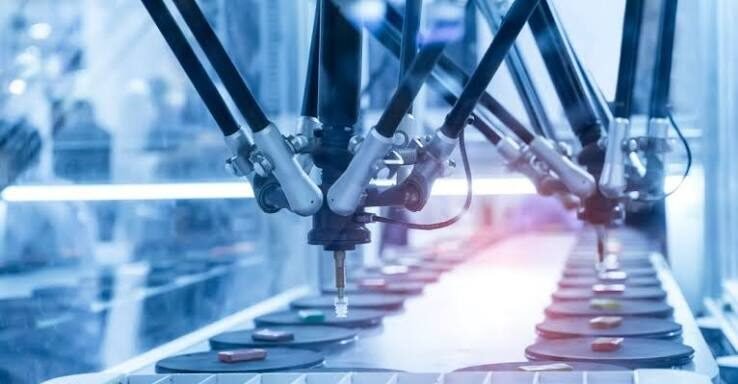
Automation plays an equally important role. Modern production equipment can execute complex tasks with minimal human intervention, ensuring consistency and accuracy even in small production runs. This is particularly valuable in environments where product specifications frequently change or where customization is required at scale.
In addition, integrated communication systems allow teams involved in design, production, and logistics to coordinate in real time. This ensures that any updates to design specifications or demand forecasts are immediately reflected in manufacturing processes. The result is a streamlined workflow that reduces delays and improves overall productivity.
Advanced monitoring systems also contribute by tracking material usage, equipment performance, and production efficiency. These insights help organizations optimize resources, reduce downtime, and maintain consistent output quality across different production cycles.
Benefits For Modern Supply Chains And Business Efficiency
One of the most significant advantages of on-demand manufacturing is its ability to strengthen supply chain efficiency. By producing goods only when needed, businesses can significantly reduce the risks associated with overstocking and underutilized inventory. This leads to improved financial flexibility and more efficient use of storage space.
Sustainability is another important benefit. With production aligned more closely to actual demand, material waste is reduced, and fewer resources are consumed unnecessarily. This creates a more environmentally responsible manufacturing model that supports long-term sustainability goals while maintaining operational efficiency.
The model also enhances responsiveness to market changes. Businesses can quickly adapt to shifts in consumer preferences without being constrained by large volumes of pre-produced goods. This flexibility is especially important in competitive industries where demand patterns can change rapidly and unpredictably.
At the same time, precision engineering has become increasingly important in supporting this manufacturing shift. The growing demand for highly specific components has led to increased reliance on custom-machined parts, which allow manufacturers to produce exact specifications without relying on standardized mass production methods. This capability supports innovation across industries where accuracy and customization are essential.
Industry Applications Across Multiple Sectors
On-demand manufacturing is being adopted across a wide range of industries, each benefiting from its ability to improve efficiency and customization. In transportation-related industries, it supports the rapid production of replacement components and specialized parts, reducing downtime and improving maintenance cycles. This ensures that systems remain operational without long delays caused by traditional supply chain constraints.
In medical and healthcare-related fields, on-demand production enables the creation of highly specialized equipment tailored to individual requirements. This level of customization improves effectiveness and ensures that tools and devices can meet precise functional needs without requiring large-scale production runs.
In aerospace and energy sectors, where components often require extreme precision and low-volume production, this model provides a highly efficient solution. It allows manufacturers to produce complex parts on demand while maintaining strict quality standards and minimizing unnecessary production overhead.
Even consumer-focused industries are increasingly adopting this approach to remain competitive in rapidly changing markets. By producing goods based on real-time demand signals, businesses can reduce waste while improving their ability to respond to evolving customer expectations. This results in shorter product cycles and more efficient use of resources across the entire production system.
Challenges And Future Outlook
Despite its advantages, on-demand manufacturing is not without challenges. One of the primary barriers is the cost of implementing advanced technologies required to support flexible production systems. Smaller organizations may face difficulties adopting these systems due to high initial investment requirements and the complexity of integration.
Another challenge involves maintaining consistent quality across smaller production batches. While automation helps improve accuracy, ensuring uniform standards across diverse production cycles still requires careful oversight and robust quality control systems. This becomes even more critical as production becomes more distributed and decentralized.
Supply chain coordination can also become more complex under this model. Since production is closely tied to real-time demand, any disruption in data flow or logistics can impact the entire system. This requires highly reliable communication networks and efficient coordination between multiple stakeholders.
However, the long-term outlook remains highly positive. As technologies continue to advance, the barriers to adoption are expected to decrease significantly. Improvements in automation, data analytics, and production efficiency will make on-demand systems more accessible to a wider range of industries and organizations.
Conclusion
The shift toward on-demand manufacturing represents a major transformation in modern industrial systems. By focusing on responsiveness, efficiency, and adaptability, it challenges traditional production models that rely heavily on mass output and long-term forecasting. Although there are challenges in implementation and scaling, the long-term benefits in sustainability, cost control, and operational flexibility make it a powerful direction for the future of manufacturing. As industries continue to evolve, this model is expected to play a central role in building more resilient and responsive supply chains capable of meeting the demands of a rapidly changing global economy.