


Pouring a new concrete driveway or patio will cost. But despite being durable and attractive, concrete deteriorates in time and gets ugly cracks. Such defects spoil the appearance of your outdoor space and reduce its durability.
Understanding the causes of cracking is one of the most effective methods to prevent them. Concrete is a hard porous substance affected by various factors including the environment, subgrade, and concrete pouring technique.
If you want your outdoor concrete to last for many years, you should know the factors causing concrete deterioration. The following article reveals the reasons why concrete gets cracked and provides helpful advice on preventing cracking.
The Most Common Causes of Cracking in Outdoor Concrete
1. Drying Shrinkage
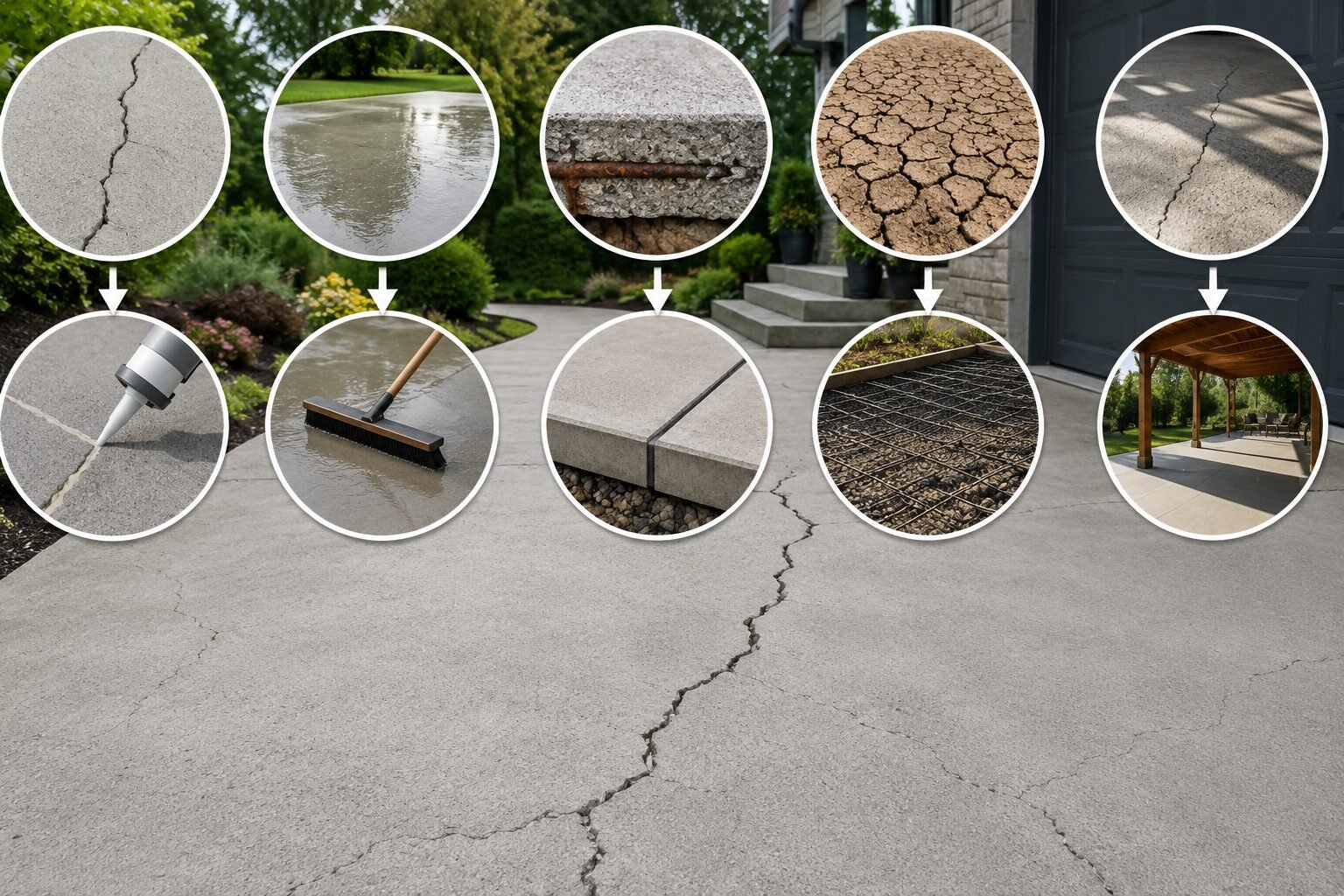
One of the most common causes of cracking is drying shrinkage. Concrete becomes brittle because of the evaporation of water in the mixture and shrinks. Drying shrinkage results in internal stress created in the slab. To avoid cracking, it is recommended to install control joints. They create weak points allowing the concrete to crack evenly along a straight line in the middle of a groove.
2. Subgrade and Settlement
The durability of the slab greatly depends on the quality of the soil beneath it. If the soil was not properly compacted, the slab will settle and voids will appear underneath. Lack of support will lead to cracking. Swelling and shrinking soils can also crack concrete. The right concrete pouring technique includes proper soil compaction and building a gravel base.
3. Freezing and Thawing
Living in a cold climate zone, you should be careful when it comes to seasonal changes. Concrete acts like a hard sponge absorbing rainwater and melted snow. Freezing water expands and increases pressure on the slab. After thawing, the surface gets tiny cracks which serve as a source of moisture during the next rainfall. Periodic sealing of the concrete surface helps to prevent such cracking in a cement sidewalk in OKC, for instance.
4. Overloading
Although concrete is strong, it can handle only a certain amount of load. A regular residential driveway will be able to carry a regular car but not a large recreational vehicle or a dumpster. Parking a heavy truck or any other piece of equipment on your concrete surface will cause cracks. To store such equipment on your property, use reinforced concrete with increased thickness.
5. Inadequate Installation and Curing
The physical properties of concrete greatly affect its durability. Concrete can be poured directly on-site without mixing at the factory. Adding water to concrete increases its brittleness. Besides, quick drying in warm weather leads to cracking. Proper curing includes keeping concrete wet for several days to complete chemical reactions.
When Should You Call a Specialist?
Not all cracks mean that there is something wrong with your concrete. Hairline cracks are not dangerous and can easily be repaired. Wide cracks growing constantly and having raised edges indicate serious problems. If you feel that there is a threat to the safety or sinking of your slab, call a professional concrete repair service right away. Experts will conduct tests of the subgrade and take necessary measures.
Maintenance of Outdoor Concrete
Regular maintenance of your outdoor concrete surfaces is very important for keeping them in good condition. Appropriate installation and maintenance practices can save you from costly repairs. It is recommended to seal concrete, monitor the weight of vehicles parked on it, and fix cracks. Go outdoors this weekend and check your concrete driveways and patios. Plan the next maintenance procedure!