



Introduction
Managing a mobile workforce comes with unique challenges. Technicians often travel between job sites, handle unexpected service requests, and need instant access to customer information. Without the right tools, businesses can experience scheduling conflicts, communication gaps, and delays. A mobile field service app helps solve these problems by keeping field teams connected and organized.
A mobile field service app enables technicians to receive assignments, access work orders, update job statuses, and communicate with office staff directly from their mobile devices. This eliminates the need for paper-based processes and reduces administrative work.
As customer expectations continue to rise, businesses are increasingly adopting a mobile field service app to improve efficiency, streamline workflows, and deliver faster, more reliable service. This guide explains the features, benefits, and best practices for using a mobile field service app effectively.
What Is a Mobile Field Service App?
A mobile field service app is a digital application designed for technicians and service professionals who work outside the office. It provides real-time access to schedules, customer information, work orders, service history, and task updates using a smartphone or tablet.
Instead of relying on printed documents or phone calls, technicians can complete their daily tasks more efficiently with a mobile field service app, ensuring better communication and faster decision-making.
Why Businesses Need a Mobile Field Service App
Field service operations involve constant coordination between office staff and technicians. Manual processes can lead to delays, missed appointments, and inaccurate records. A mobile field service app simplifies these operations by providing instant access to essential information.
Businesses benefit from a mobile field service app because it helps:
- Improve technician productivity
- Reduce paperwork
- Enhance communication
- Increase scheduling accuracy
- Provide real-time job updates
- Maintain organized service records
By centralizing field operations, businesses can deliver a smoother and more consistent customer experience.
Key Features of a Mobile Field Service App
Real-Time Job Assignments
Managers can assign or update jobs instantly. Technicians receive notifications directly through the mobile field service app, allowing them to respond quickly to new assignments.
Digital Work Orders
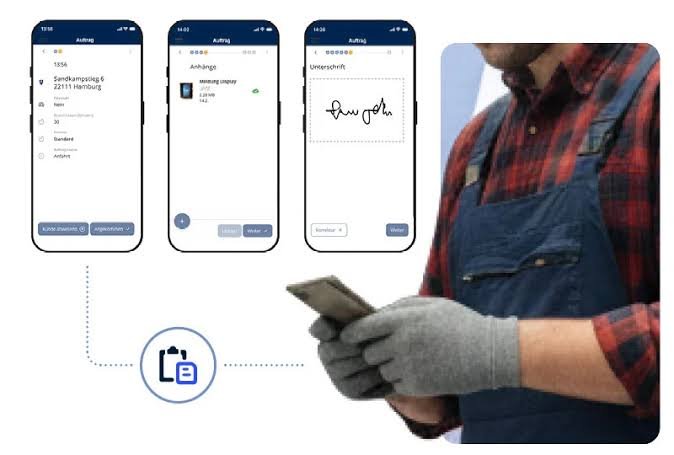
A mobile field service app provides complete work orders containing customer details, service instructions, equipment history, and job requirements. This reduces errors and improves preparation before arriving on-site.
Mobile Scheduling
Technicians can view their daily schedules, appointment times, and route information from anywhere. If schedules change, updates appear immediately within the app.
Photo and Document Capture
Field workers can upload images, inspection reports, and completed documentation directly through the mobile field service app, creating accurate digital records.
Electronic Signature Collection
Many organizations use a mobile field service app to collect customer approvals electronically, eliminating paper forms and simplifying record management.
Benefits of Using a Mobile Field Service App
Increased Workforce Productivity
Technicians spend less time handling paperwork and more time completing service tasks. Easy access to job information improves efficiency throughout the workday.
Better Customer Satisfaction
Accurate arrival times, faster service completion, and improved communication help create a positive customer experience.
Faster Communication
Office staff and field technicians remain connected through real-time updates, reducing delays and misunderstandings.
Improved Data Accuracy
Information entered directly into the mobile field service app is recorded immediately, reducing manual entry errors and ensuring accurate service documentation.
Lower Administrative Costs
Digital processes reduce printing, paperwork, and manual record management, helping businesses improve operational efficiency.
Best Practices for Implementing a Mobile Field Service App
Provide Employee Training
Ensure technicians understand how to use every feature of the mobile field service app effectively. Proper training increases user adoption and productivity.
Keep Customer Information Updated
Maintaining accurate customer records helps technicians prepare for each assignment and provide better service.
Encourage Real-Time Updates
Technicians should update job statuses as work progresses. This allows office staff to monitor operations and respond quickly to schedule changes.
Standardize Digital Documentation
Using consistent forms and reporting methods improves record quality and simplifies future reference.
Monitor Operational Performance
Regularly reviewing productivity reports helps managers identify improvement opportunities and optimize field operations.
Industries That Benefit from a Mobile Field Service App
Many industries rely on a mobile field service app to coordinate mobile teams and improve operational efficiency.
HVAC Services
Technicians can access maintenance schedules, customer histories, and equipment details before arriving at service locations.
Plumbing
Emergency repairs and scheduled maintenance become easier to manage with mobile access to work orders and appointments.
Electrical Services
Electricians receive assignments, document completed work, and update job progress directly from the field.
Facility Maintenance
Maintenance teams coordinate inspections, repairs, and preventive maintenance across multiple buildings using a centralized mobile platform.
Equipment Service
Service professionals can document repairs, upload photos, and maintain accurate maintenance histories without returning to the office.
Common Challenges Solved by a Mobile Field Service App
Businesses often face operational issues that impact service quality. A mobile field service app helps address these challenges effectively.
Communication Delays
Instant messaging and real-time updates keep technicians and office staff connected throughout the day.
Scheduling Conflicts
Updated schedules help prevent overlapping appointments and improve technician utilization.
Paper-Based Processes
Digital work orders and electronic documentation eliminate the need for printed forms and manual filing.
Incomplete Service Records
Every completed task is stored digitally, making future service history easy to access and review.
Limited Field Visibility
Managers gain better insight into technician progress, completed assignments, and upcoming appointments.
Future Trends in Mobile Field Service App Technology
Technology continues to reshape field operations. Future mobile field service app solutions are expected to include artificial intelligence, predictive maintenance capabilities, voice-enabled reporting, and enhanced offline functionality.
Connected devices and advanced analytics will enable technicians to receive equipment diagnostics before arriving on-site, improving preparation and reducing repair times. As these innovations evolve, businesses using a mobile field service app will be better positioned to improve efficiency and adapt to changing customer expectations.
Conclusion
A mobile field service app has become an essential tool for businesses managing technicians outside the office. By providing real-time access to schedules, work orders, customer information, and digital documentation, it helps streamline operations and improve workforce productivity.
From reducing paperwork and enhancing communication to increasing efficiency and supporting better customer service, a mobile field service app offers significant operational advantages. Businesses that adopt modern mobile solutions are better equipped to manage field teams effectively, respond quickly to service requests, and achieve long-term success in an increasingly competitive environment.